
The short version
- In Victoria the building surveyor checks the work against building regulations. Consumer Affairs Victoria says surveyors don't supervise the work or check it against your contract.
- An occupancy permit means the house is safe and suitable to live in. It doesn't mean every item in your contract is finished or free of defects.
- Consumer Affairs Victoria says you don't have to make the final payment until the contracted work is complete, and known defects shouldn't be left for the defects liability period.
Your builder rings to say the house is nearly done and handover is booked for next Thursday. After a year of site visits, stage payments and choosing tap ware, you're keen to get the keys.
Before you sign anything or make the last payment, it's worth knowing who has actually checked the house, and what they were checking for. I'm a registered builder and I'm still building, so I see handover from both sides of the fence.
Do you need an independent inspector at handover?
An independent inspector at handover isn't a legal requirement in Victoria, but I'd book one for almost every new home, because the people who have inspected your house so far were checking different things from the things you're paying for.
Your building surveyor inspects the work for compliance with the Building Act and building regulations, which Consumer Affairs Victoria describes as mainly relating to health, safety and amenity. Consumer Affairs Victoria also says building surveyors don't supervise the work or check it against your contract. Your builder's own site supervisor works for the builder. Nobody else is walking through room by room with your plans, your specifications and your interests in mind.
That's the job of a pre-handover inspection, often called a PCI after the practical completion stage. You'll find mine under new build inspections.
Doesn't the occupancy permit mean the house is finished?
The occupancy permit means the house is safe and suitable to live in, and it doesn't mean the house is finished. Consumer Affairs Victoria is clear on this: an occupancy permit doesn't necessarily mean all building work is done, and items like paving or landscaping may still be outstanding.
Under Consumer Affairs Victoria's checklist, the work is complete when everything in your plans and specifications has been finished to the agreed standard, major defects have been fixed, and the surveyor has issued the occupancy permit.
So a house can pass its final inspection and still have doors that don't close properly, gaps in the cladding, a fall in the shower that sends water the wrong way or a wall painted the wrong colour. Those are contract and workmanship issues. The surveyor wasn't there to find them.
What does a handover inspection actually look at?
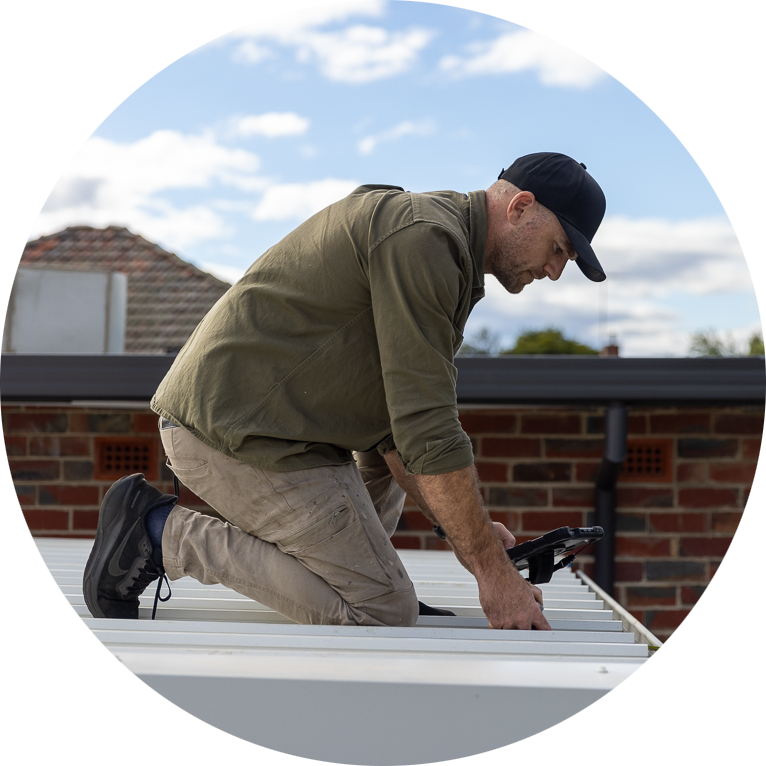
A handover inspection looks at the finished house against the plans, the specifications and good building practice, and lists what needs fixing before you accept it. I'm looking at the work the way I'd look at my own on a job I was about to hand over:
- Workmanship and finishes, including plaster, paint, tiling, joinery, doors and windows
- Wet areas, including falls to floor wastes, sealing and signs of early leaks
- The exterior, including cladding, flashings, gutters, downpipes and drainage away from the house
- The roof space, where it's safe to get into, and the roof covering
- Anything in your contract that's missing, different or unfinished
My report has labelled colour photos and the location of each item, so you and the builder are looking at the same list. It's a visual inspection, so I can't see inside walls or under finished floors. A report is not a guarantee that every problem has been found, which is one reason I like to get in earlier where I can. A new build inspection is often two visits rather than one.
Can't you just fix things in the defects liability period?
The defects liability period is for problems that show up after you move in, not for defects that are already there at handover. Consumer Affairs Victoria says this period is usually three, six or nine months, and that defects known at completion should be fixed so completion is reached before the final payment is made.
Booking an inspection doesn't waive the builder's defect period either. You still get it. The point is to get the known items on paper first, so the defects liability period is left for the things nobody could have seen.
Consumer Affairs Victoria also says you're not required to make the final payment until all the work is complete, even once you have the occupancy permit. Once the money is paid, it's harder to get the small items finished. Talk to your solicitor or conveyancer about what your contract says before you hold anything back.
When should you book the handover inspection?
The handover inspection should be booked as soon as the builder gives you a practical completion or handover date, so the report arrives before you sign off or pay. Ring the builder or site supervisor early to sort out access. Consumer Affairs Victoria says you have a right to reasonable access to the site during construction, and I'm happy to liaise with the builder to arrange a time.
On handover day, walk through slowly and list anything you find on the handover sheet, including scratches and marks. Consumer Affairs Victoria says this helps avoid arguments later about whether damage was there before you moved in. If items are still unfinished after that, put your request to the builder in writing. If you're still mid-build, have a look at how my inspections run and get in touch before the next stage.
Common questions
Will the builder mind if I bring an inspector?
Most builders are used to it. Give them notice, keep the visit to an agreed time and make sure it doesn't hold up the work, which Consumer Affairs Victoria also recommends.
What if the builder won't fix the items on the report?
Consumer Affairs Victoria suggests listing the incomplete or faulty work, raising it with the builder straight away, then sending a written request by registered post. Consumer Affairs Victoria can also give you advice on next steps.
Does domestic building insurance cover defects I find after handover?
Usually not in the way people expect. Consumer Affairs Victoria says domestic building insurance only covers you if the builder dies, becomes insolvent or disappears.
Sources
- Consumer Affairs Victoria - Building definitions
- Consumer Affairs Victoria - When building work is complete checklist
- Consumer Affairs Victoria - Building progress
General information only, based on a visual inspection perspective. It is not legal or financial advice, and every property is different. An inspection report is not a guarantee that a property is free of defects.
About Dale
Dale Phelan owns DSP Building Inspections and does every inspection himself. He started out as a carpenter, became a registered builder (Domestic Builder Unlimited, DB-U 61057), and has project-managed, built and developed more than 35 homes around Melbourne. He is still actively building, so his reports explain the likely cause of each defect and how urgent it is. More about Dale