
The short version
- In a Victorian private sale, Consumer Affairs Victoria says a buyer can negotiate to make the sale subject to a successful building or pest inspection.
- A condition only goes into the contract if the seller agrees to it, and a seller may turn down an offer because of its conditions.
- Conditions can't be added at auction without the seller's agreement, and there's no cooling-off period for auction sales.
You've found a house that's for sale by private treaty, you like it, and you'd rather not hand over a deposit before someone has been under the floor. The usual answer is an offer that's "subject to building and pest".
Once an offer like that is signed, the clock is usually running on the inspection. So here's how the condition works from an inspector's side, what to sort out before you sign, and what to do once the report lands.
What does "subject to building and pest" mean in Victoria?
A "subject to building and pest" offer means the sale only goes ahead if a building and pest inspection comes back to your satisfaction, as defined in the contract. Consumer Affairs Victoria lists the successful completion of a building or pest inspection as one of the conditions a buyer can negotiate in a private sale, alongside finance and the sale of an existing property.
The condition is a term of the contract, so its exact wording matters a great deal. That wording covers how long you have, who does the inspection, what counts as an unsatisfactory result and how you tell the seller. Those details are your conveyancer's job, not mine. Consumer Affairs Victoria recommends engaging your own legal practitioner or conveyancer, and both can advise on the terms and conditions in a contract of sale.
Can you make an auction bid subject to building and pest?
An auction bid can't be made subject to building and pest unless the seller agrees. Consumer Affairs Victoria says that by bidding you accept the contract terms on display before the auction, and you can't add conditions such as finance afterwards without the seller's agreement. There's also no cooling-off period for an auction sale.
The same goes for some offers made close to an auction. Consumer Affairs Victoria says the cooling-off period doesn't apply to a property bought within three clear business days before or after a public auction. If the house is going to auction, plan on inspecting first. I've covered the timing in getting a building inspection before auction.
How long do you get to do the inspection?
The time you get for the inspection is whatever period the contract says, which is why you should check it before you sign. A tight deadline is fine if you've lined up an inspector and the seller will allow access quickly. It gets stressful if you start ringing around after the ink is dry.
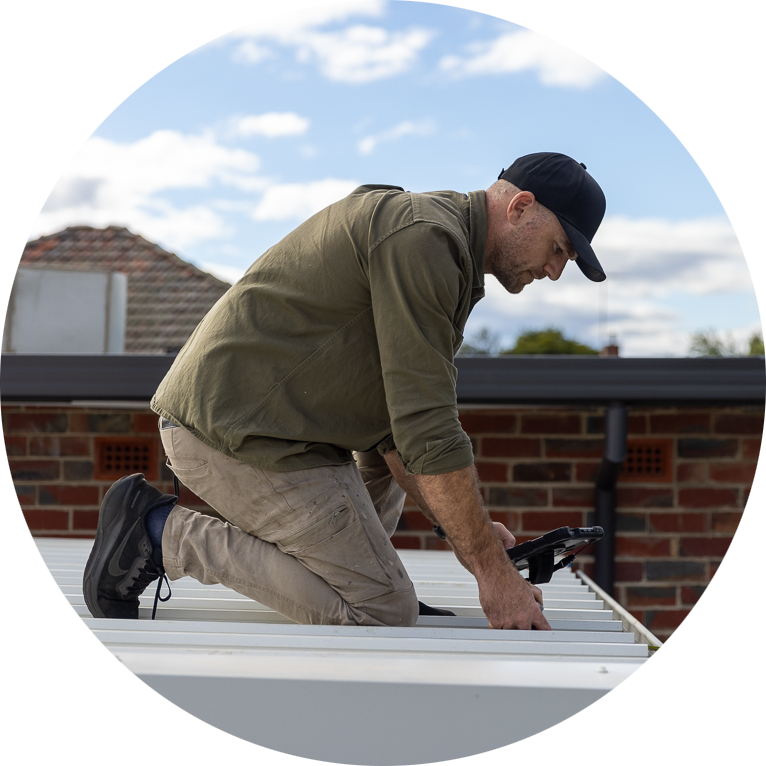
From my end, I'm usually on site for one to three hours, and the written report normally lands in your inbox the same day, within 24 hours. I'll also deal with the selling agent to arrange access, so you don't have to chase keys. Before you sign, I'd sort out these points:
- Book your inspector, or at least confirm they can fit you in inside the condition period
- Ask your conveyancer how long the condition runs and whether it's counted in business days
- Ask how you need to notify the seller if you aren't satisfied, and by when
- Check whether the agent can give access to the roof space and subfloor
What happens if the building and pest report finds problems?
A building and pest report that finds problems usually gives you three broad options, depending on how your condition is worded: go ahead as is, try to renegotiate, or end the contract under the condition. Your conveyancer is the person to confirm which of those your contract allows and how to do it properly.
My part is helping you work out how serious the findings are. Consumer Affairs Victoria notes you may be able to use a building report to negotiate the price and conditions with the seller, and a clear report with photos and locations makes that conversation easier. Plenty of reports list a long run of minor items that are normal for the age of the house. A few things matter much more, such as active termites, structural movement or a roof that's letting water in. My post on major vs minor defects goes through how I sort one from the other.
Ring me after you've read the report. Ten minutes on the phone usually tells you more than another read of page eleven, and it gives you something solid to take to your conveyancer and the agent.
Is a conditional offer better than relying on cooling-off?
A conditional offer is usually a better fit for an inspection than relying on cooling-off, because cooling-off is short and costs you money to use. Consumer Affairs Victoria says the cooling-off period on a private sale is three clear business days, starting from the date you sign. If you cool off, you get a refund less $100 or 0.2 per cent of the purchase price, whichever is greater.
Three business days is tight for booking an inspection, reading the report and getting advice. A condition with a sensible deadline gives you room to do it properly. The catch is that sellers don't have to accept it. Consumer Affairs Victoria notes a seller may reject an offer for reasons other than price, including the conditions attached to it.
If you're about to put in an offer, book your pre-purchase building and pest inspection at the same time, so the clock isn't running before you've found an inspector. Keep in mind it's a visual inspection of the safe, accessible areas on the day, so an inspection report isn't a guarantee that nothing has been missed.
Common questions
Does a building and pest condition make my offer less attractive?
It can. Consumer Affairs Victoria notes a seller may reject an offer because of the conditions attached to it. A short, realistic inspection period with an inspector already booked tends to be easier for a seller to accept.
Can the deposit be released to the seller while the condition is open?
No. Consumer Affairs Victoria says the deposit can only be released to the seller before settlement if the contract is unconditional, along with other requirements. Your conveyancer can explain the rest.
Do I need both a building and a pest inspection?
For most houses in Melbourne I'd do both. They're done to different Australian Standards, and I do them in the same visit. You can see how that runs on the inspection process page.
Sources
- Consumer Affairs Victoria - Buying property by private sale
- Consumer Affairs Victoria - Buying property at auction
- Consumer Affairs Victoria - Seek expert advice on property
- Consumer Affairs Victoria - Inspect properties before you buy
General information only, based on a visual inspection perspective. It is not legal or financial advice, and every property is different. An inspection report is not a guarantee that a property is free of defects.
About Dale
Dale Phelan owns DSP Building Inspections and does every inspection himself. He started out as a carpenter, became a registered builder (Domestic Builder Unlimited, DB-U 61057), and has project-managed, built and developed more than 35 homes around Melbourne. He is still actively building, so his reports explain the likely cause of each defect and how urgent it is. More about Dale