
The short version
- RACV lists weather damage, ageing materials, blocked gutters and poor maintenance as the most common causes of roof leaks in Victoria.
- In Victoria, repairs to metal roofs, flashings, gutters and downpipes are regulated plumbing work, while tile roof coverings sit outside that rule.
- Consumer Affairs Victoria says you can use an inspection report to negotiate the price and conditions, and a private sale offer can be made subject to inspection.
A ceiling stain and the words "evidence of roof leak" can make a buyer's stomach drop. Water in a house always sounds bad, and nobody wants to buy a problem.
Most of the time, a roof leak is a repair job you can price and plan for. The question is what's causing it and how long it has been going on.
Is a roof leak in a building report a deal breaker?
A roof leak in a building report is usually not a deal breaker by itself, because most leaks have a single cause that a roofer or roof plumber can fix. What changes the picture is how long the water has been getting in and what it has damaged on the way.
A fresh stain under a cracked tile is one thing. Soft ceiling plaster, rotting roof timbers or water running into the wall frame is a bigger job, and that's where I'd slow down. My post on major and minor defects explains how I separate the two.
What causes a roof leak in an older house?
A roof leak in an older house is most often caused by weather damage, ageing materials, blocked gutters or poor maintenance, which is how RACV sums up the common causes in Victoria. In the roof space I'm usually tracing the water back to one of these:
- Cracked, slipped or missing tiles
- Rusted metal sheets or gutters
- Damaged flashings and valleys where roof sections meet or where a chimney comes through
- Gutters that overflow and push water back into the roof cavity
- Moss and lichen in the tile joints that dam the water
- Poor sealing around solar panels, whirlybirds or skylights added later
RACV notes that rust can show up faster on coastal homes because of salt in the air. Near the water in Williamstown and Altona, I pay close attention to metal roofs, gutters and fixings for that reason.
RACV also points out that many leaks go unnoticed until the ceiling, insulation or plaster is already damaged. That's why the roof space matters so much. Damp insulation and water-stained timbers tell me more than the ceiling does.
Who can fix a roof leak in Victoria?
Who can fix a roof leak in Victoria depends on what the roof is made of. Under the Plumbing Regulations 2018, the Building and Plumbing Commission treats repairs to metal roof coverings, roof flashings and roof drainage such as gutters and downpipes as roofing stormwater work, which is regulated plumbing work.
Roof coverings made of non-metallic tiles, concrete, timber, glass, bitumen or slate are excluded from that definition, so a roof tiler can usually handle broken or slipped tiles. The flashings and gutters on a tiled roof are still plumbing work.
Licensed plumbers in that class issue compliance certificates. If the seller says the roof was recently repaired, ask for the paperwork. A tradesperson's quote is also worth getting before you renegotiate, because it gives both sides a real number to work with.
Should you renegotiate the price over a roof leak?
Renegotiating the price over a roof leak is reasonable when the report shows a real defect, and Consumer Affairs Victoria says buyers can use an inspection report to negotiate the price and conditions in the contract. How much room you have depends on how you're buying.
In a private sale, you can make your offer conditional on a building and pest inspection, then go back to the seller with the report and a quote. My post on subject to building and pest offers covers how that works.
At auction there's no cooling-off period, so any negotiating has to happen before you bid. In practice that means finding the leak early, getting a quote and setting your limit with the repair already counted. Your conveyancer is the right person to talk to about the contract side.
When should you walk away over a roof leak?
Walking away over a roof leak makes sense when the leak has caused damage you can't measure, or when the whole roof is at the end of its life. These are the signs I'd take seriously:
- Rot in rafters, battens or the wall frame below a long-running leak
- Leaks in several places, which points to the roof covering as a whole
- Fresh paint or patched ceilings over areas the report flags as damp
- Damp conditions in the roof space that also show up in the pest section
RACV says reroofing may be needed if a roof is 30 to 40 years old or keeps leaking after repairs. That's a big cost on top of the purchase, and you'd want a proper quote before deciding the house is still worth it.
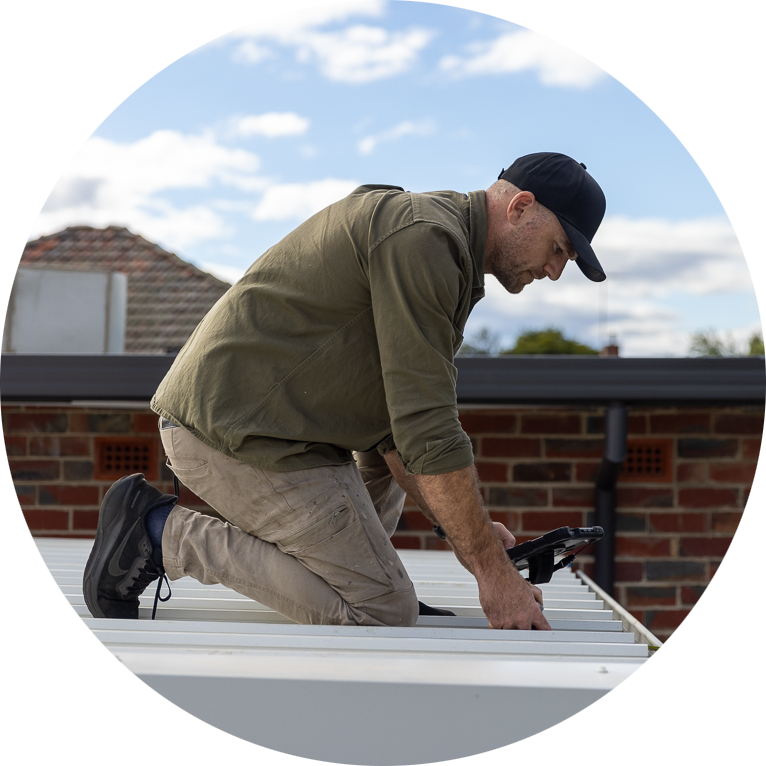
Damp timber also attracts termites, which I wrote about in conducive conditions. If you'd like a builder's eye on a roof before you commit, my pre-purchase building and pest inspection includes the roof space and roof exterior where they're safe to reach. An inspection report is not a guarantee, so ring me once the report is through and we'll talk about what the leak means for this house.
Common questions
Can an inspector tell how long a roof has been leaking?
Not to the month. Rot, rust and staining on timbers and insulation give a good idea whether a leak is recent or long running, but a visual inspection can't date it exactly.
Will the inspector go onto the roof?
The roof exterior is inspected where it's safe and accessible. Any part I can't safely reach is noted in the report, so you know what wasn't seen.
Does a leak only show up when it's raining?
No. If it hasn't rained recently, I'm reading the evidence the water left behind, and a dry stain can still be an active leak. That's why the roof space check matters.
Sources
- RACV - Roof leaks: repairs and maintenance
- Building and Plumbing Commission - Roofing stormwater work
- Consumer Affairs Victoria - Inspect properties before you buy
- Consumer Affairs Victoria - Buying property by private sale
General information only, based on a visual inspection perspective. It is not legal or financial advice, and every property is different. An inspection report is not a guarantee that a property is free of defects.
About Dale
Dale Phelan owns DSP Building Inspections and does every inspection himself. He started out as a carpenter, became a registered builder (Domestic Builder Unlimited, DB-U 61057), and has project-managed, built and developed more than 35 homes around Melbourne. He is still actively building, so his reports explain the likely cause of each defect and how urgent it is. More about Dale