
The short version
- A building inspection is visual and limited to areas that are safe and reasonably accessible, so a roof space or subfloor that couldn't be entered hasn't been inspected.
- RACV lists roof spaces with restricted entry, subfloors with too little clearance and areas blocked by stored belongings as common reasons parts of a house can't be inspected.
- Victoria's Building and Plumbing Commission says termite activity usually happens in concealed areas, so an uninspected subfloor or roof space leaves a real gap in a pest report.
Somewhere in most building reports there's a section on access. It's easy to skim past, because it reads like fine print. If it says the roof space or subfloor wasn't accessible, though, it's one of the most important lines in the whole report.
Here's what that note means, why it happens, and what I'd do about it before buying.
What does "not accessible" mean in a building report?
"Not accessible" in a building report means the inspector couldn't safely get into or see that part of the house, so nothing in that area has been checked. A note like that tells you the area wasn't seen, and it tells you nothing about its condition.
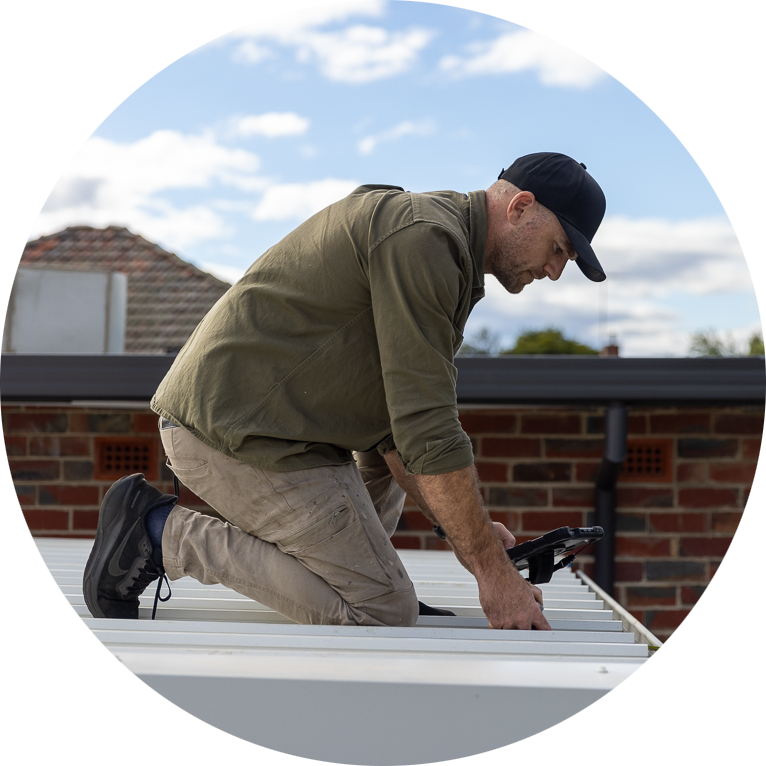
That's how pre-purchase inspections work in Australia. RACV explains that inspections follow Australian Standards that limit them to areas that are safe and reasonably accessible, and that inspectors don't pull things apart or do destructive testing. My pre-purchase building and pest inspection works the same way: a non-invasive look at the interior, roof void, exterior, subfloor and roof exterior, wherever I can get to safely.
Why can't an inspector get into the roof space or subfloor?
An inspector usually can't get into the roof space or subfloor because there's no way in, not enough room to move, or it isn't safe. RACV lists the usual culprits:
- Roof spaces with restricted entry, such as a tiny or sealed manhole
- Subfloors with too little clearance to crawl through
- Areas blocked by stored belongings
- Locked rooms
- Roofs that are unsafe to walk on and can't be seen from a ladder or another device
- Areas with safety hazards
Some of these are built into the house. Others, like boxes under the manhole or a locked shed, can often be sorted with one phone call to the agent.
How much risk does an uninspected subfloor or roof space leave?
An uninspected subfloor or roof space leaves a real gap, because those are the areas where structural problems, moisture and termites tend to show up first. How much it matters depends on the house.
On a timber floor house on stumps, like the older weatherboards through Preston and Reservoir, the subfloor is where I check stumps, bearers, joists, damp and ventilation. If I can't get under there, I can't tell you much about how the floor is holding up. Consumer Affairs Victoria notes that sloping or bouncy floors may mean stumps need replacing, so I'll still look for clues from inside, but that isn't the same as seeing the stumps. My post on restumping and reblocking covers what that work can involve.
The pest side is just as important. The Building and Plumbing Commission says termite activity is often difficult to detect because it usually happens in concealed areas, and that infested sites can be found in roofs. It also advises keeping subfloors well ventilated and not storing timber or other cellulose products under the house. If I can't see the subfloor, I can't tell you whether any of that is happening.
The roof space matters for different reasons. Leaks, damaged roof timbers and poor insulation often show up there long before they reach the ceiling. I wrote more about that in roof leaks found in a building inspection.
What should you do if part of the house couldn't be inspected?
If part of the house couldn't be inspected, the first job is to find out why, and whether it can be fixed before you commit. This is the order I'd work in:
- Ring your inspector and ask exactly what was blocked and what they'd normally expect to find in that area for a house of that age.
- If the problem was stored goods, a locked door or a missing key, ask the agent to clear it and book a return visit to inspect that area.
- If the access problem is part of how the house is built, ask whether a specialist can help, such as a roof plumber for an unsafe roof.
- Look at the rest of the report for clues. Cracking, uneven floors or ceiling stains near the area you couldn't see deserve more weight.
- Talk to your conveyancer about how the gap affects your offer or your contract.
Consumer Affairs Victoria says there's no cooling-off period when you buy at auction, so any second visit has to happen before you bid. In a private sale you may have more room to make your offer subject to inspection, which I've covered in subject to building and pest offers.
Should you buy if the subfloor couldn't be inspected?
Buying a house when the subfloor couldn't be inspected can still be reasonable, as long as you treat that area as unknown and allow for it in your price. The mistake is reading a report with no defects listed in the subfloor as a report that found nothing wrong.
I'd be more cautious with an older timber house where the subfloor is the main structure holding the floors up, or where other parts of the report point to movement or damp. I'd be less worried on a newer house on a concrete slab, where there may be no subfloor to inspect at all.
An inspection report is never a guarantee, and access limits are one of the reasons why. If you know about a locked room or a lot of stored furniture before booking, tell me so we can try to sort access first. The inspection process page explains how a visit runs. Once your report arrives, give me a call and we'll go through what the access notes mean for that particular house.
Common questions
Will the inspector move furniture or stored goods to get access?
Generally no. The inspection is non-invasive, so areas behind or under stored goods are noted as not inspected. Ask the agent to have access cleared before the inspection where you can.
Can I ask for a second visit once access is sorted?
Yes, ask your inspector whether they can come back to look at the area that was missed. Do it before auction or before your conditions expire.
Does a house on a concrete slab have a subfloor?
Usually not in the same way. A slab sits on the ground, so there's no crawl space to check, but the inspector still looks at the slab edges, weep holes and drainage around the outside.
Sources
- RACV - What property inspections don't cover
- Building and Plumbing Commission - Termites
- Consumer Affairs Victoria - Inspect properties before you buy
- Consumer Affairs Victoria - Buying property at auction
General information only, based on a visual inspection perspective. It is not legal or financial advice, and every property is different. An inspection report is not a guarantee that a property is free of defects.
About Dale
Dale Phelan owns DSP Building Inspections and does every inspection himself. He started out as a carpenter, became a registered builder (Domestic Builder Unlimited, DB-U 61057), and has project-managed, built and developed more than 35 homes around Melbourne. He is still actively building, so his reports explain the likely cause of each defect and how urgent it is. More about Dale